
Clearwater County Arrest History
Clearwater arrest history is distributed across four principal custodians. The arresting agency holds the incident narrative. Clearwater County Sheriff and the jail hold local booking and custody details. The Clearwater clerk and Idaho iCourt hold filed charges and the eventual court result. Idaho State Police Bureau of Criminal Identification maintains fingerprint-supported Idaho criminal-history cycles.
Which agency made the arrest matters in this 2,457-square-mile rural county. The Clearwater County Sheriff handles county matters and the jail; Orofino Police creates city reports; Idaho State Police may create the report for highway enforcement or a state investigation. Pierce and Weippe requesters should first confirm whether city authority, the sheriff, or ISP handled the event rather than assuming the custodian from a mailing address.
No Online Clearwater Booking Blotter
No verified official Clearwater County inmate search, public booking log, arrest-record form, local warrant database, or routine mugshot gallery was found in the official sources. That negative finding prevents a common mistake: unofficial roster sites should not be treated as county records. Contact the sheriff through its official department page for current custody, booking number, bond or release status, and the process for requesting a releasable booking record.
Prepare the full name, arrest date or range, incident location, likely agency, report or booking number if known, and a precise description of the requested record. Ask about redactions, fees, delivery, and identification requirements before sending payment. The Idaho Public Records Act allows requests to the agency that holds the record, but exemptions can protect active investigative material and personal data.
Clearwater County Sheriff and Jail
Use the official county Sheriff page for current contact details. No reliable official address, hours, dedicated records line, or local fee schedule was available in the research, so confirm those details directly.
Looking Up Clearwater County Arrests
A channel-complete lookup follows the event from the arresting officer through custody, prosecution, and any later state record. Allow time for a new arrest to reach the court system, and remember that charges can change after prosecutor review.
- Identify the incident location and likely arresting agency; request the arrest or incident number and releasable report from that agency.
- Contact Clearwater County Sheriff and jail to confirm current custody, booking details, bond, release, and request procedure.
- Search Idaho iCourt for filed Clearwater charges and later disposition, recognizing a filing delay may occur.
- If the person was sentenced or transferred, use IDOC Resident/Client Search; use VINELink only as a supplemental custody-notification service.
- For your own statewide Idaho history, submit the official BCI name or fingerprint request; use ISP’s records portal for an ISP-created incident report.
- If charges were dismissed, acquitted, or never filed, review the narrow relief conditions in Idaho Code §67-3004(10).
Orofino Report, Booking, and Court Case
An Orofino-area arrest can create three records in short order. Orofino Police may keep the narrative and evidence-related report. Clearwater jail records the intake, fingerprints, photograph, holds, and custody status. If the prosecutor files a count, the Clearwater clerk opens the court file in iCourt. None of these records automatically contains the full content of the other two.
For an Orofino Police event, start at the official police department page; the city clerk is a general public-record fallback. For a sheriff or ISP event, send the request to the creating agency. This agency-first rule is especially important outside city limits, where the same postal area may include different law-enforcement jurisdictions.
Inside a Clearwater County Arrest Record
The precise fields depend on whether the document is an officer report, booking file, court docket, or BCI record. Initial charges describe what was entered at the time, not necessarily what a prosecutor later files.
| Identifiers | Name and aliases, booking or incident number, and limited demographic identifiers subject to redaction. |
|---|---|
| Arrest details | Date, time, location, arresting agency, stated basis, and cited offenses. |
| Booking details | Admission time, fingerprints and photograph, custody location, warrants or holds. |
| Charges | Counts recorded at intake; compare them with prosecutor-filed counts in iCourt. |
| Bond and release | Bond information, release method, and date when public and recorded. |
| Court link | Case number, court, hearings, and disposition after a prosecution is filed. |
| Mugshot policy | No Clearwater policy promising routine online publication was located; ask the custodian about lawful release. |
A probable-cause narrative may be partly withheld during an investigation. Victim, minor, medical, driver-license, Social Security, and other protected information can be removed under applicable law.
The Clearwater Booking-to-BCI Chain
A fingerprintable booking begins with local identity intake: staff record identifiers, charges, custody information, fingerprints, and a photograph. Fingerprint information is transmitted to BCI and can become an arrest cycle in the Idaho Central Repository. The court and criminal-justice agencies later report dispositions back to BCI.
The Bureau of Criminal Identification page shows the state repository that receives qualifying Idaho arrest information.
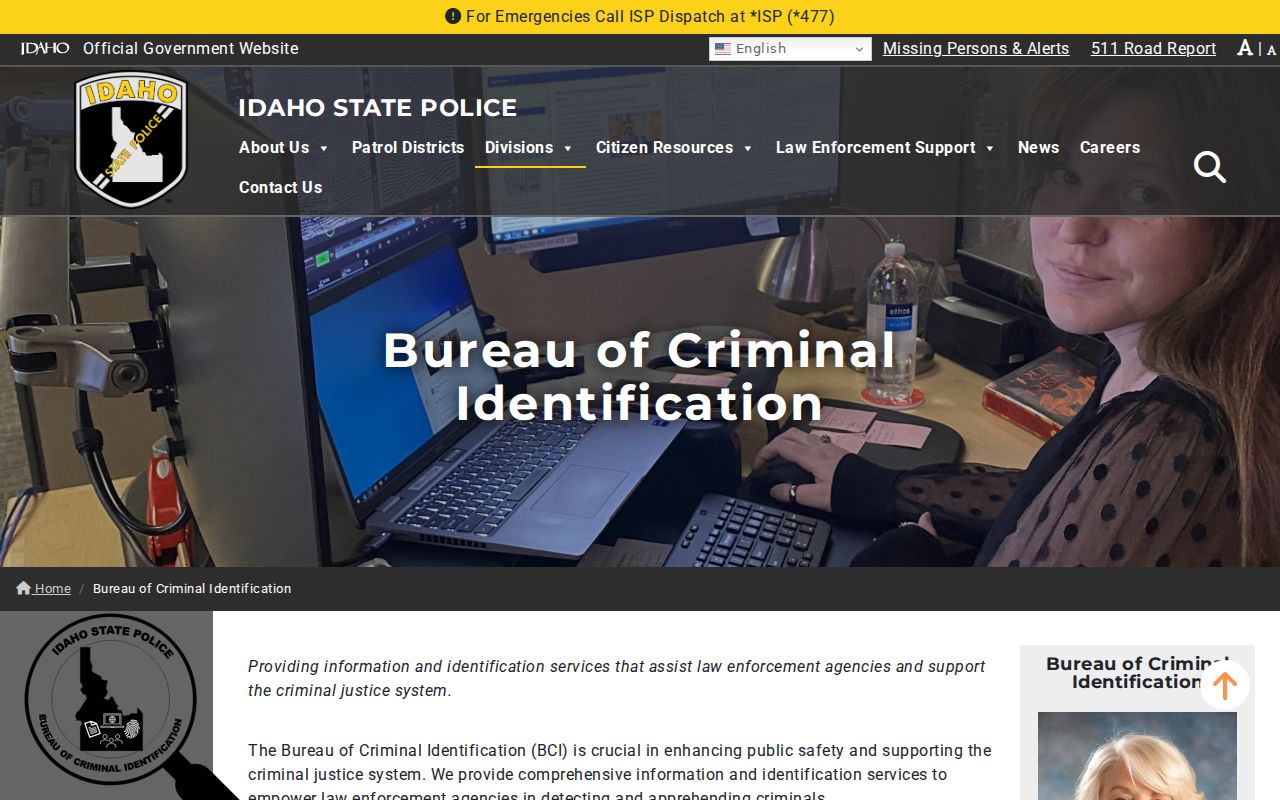
This state record is related to, but not identical with, the Clearwater booking file.
BCI explicitly explains that its repository is fingerprint-arrest based. A local arrest can exist even if no fingerprint card reached BCI, and an unresolved entry may reflect a missing court disposition. Dismissal normally remains shown as the outcome unless authorized expungement or shielding changes access.
Booking Logs and Recent Arrests
Clearwater County does not offer a verified public official booking log in the reviewed material. For a recent arrest, call or request the information from the sheriff and identify the booking as precisely as possible. Then check iCourt after prosecutors have had time to file. A blank iCourt result immediately after an arrest neither disproves the arrest nor establishes that prosecution will never occur.
A jail answer is also time-limited. It addresses whether a person is in local custody now or supplies a recent booking status. After release, that person may no longer appear in a current-custody system. After an Idaho prison transfer or placement under felony supervision, IDOC Resident/Client Search becomes the better locator; it updates daily but warns that status can change faster than the update.
VINELink can supplement an agency inquiry with custody notifications.
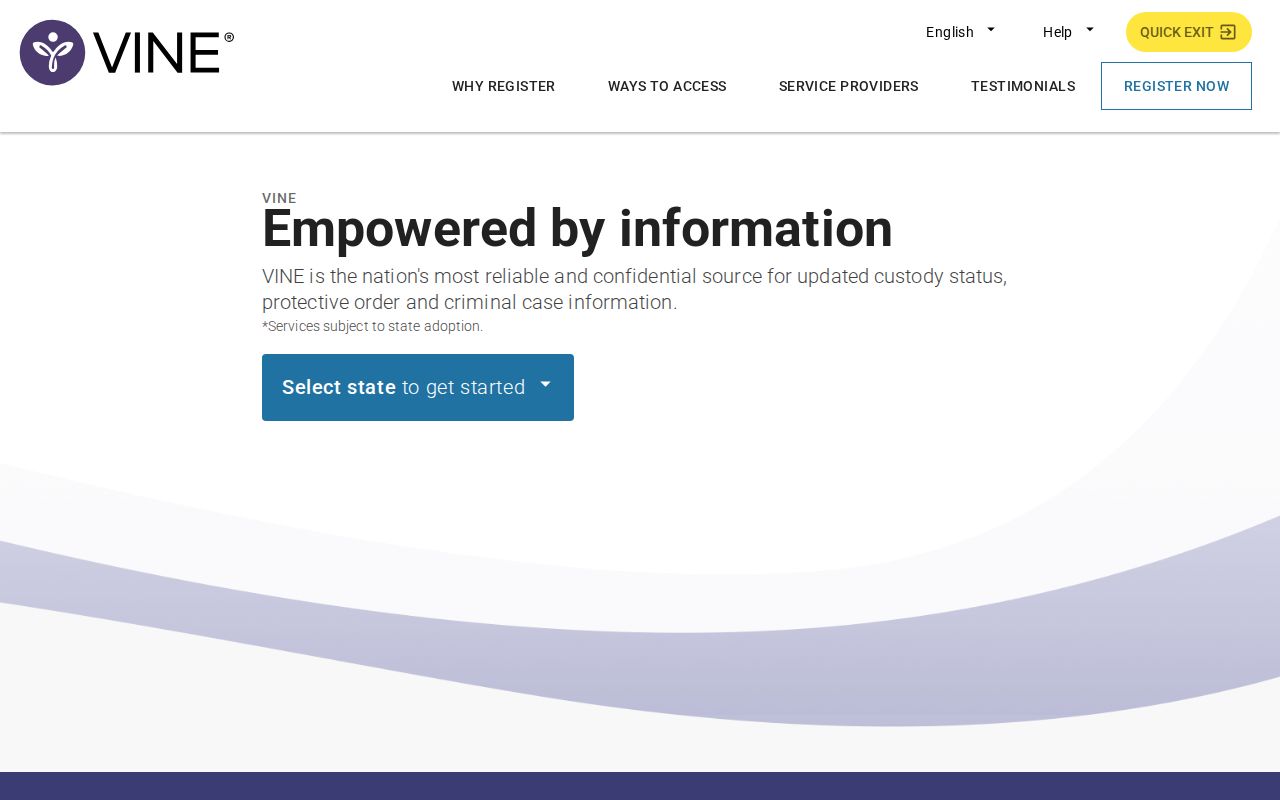
Notifications help track change, but the sheriff, jail, and court remain the originating record sources.
Idaho BCI Self-Review Options
BCI has no instant public name-search portal. A person can request an Idaho-only name-based check for $20 or a fingerprint-based Idaho check for $25 as of January 1, 2026. Fingerprints are more reliable for identity matching. BCI accepts inked-and-rolled fingerprint cards; outside the Treasure Valley, ISP directs people to local law enforcement, so ask the Clearwater Sheriff about present rolling availability and any local charge.
The official BCI fingerprinting and background-check instructions provide current forms, submission channels, and fees.
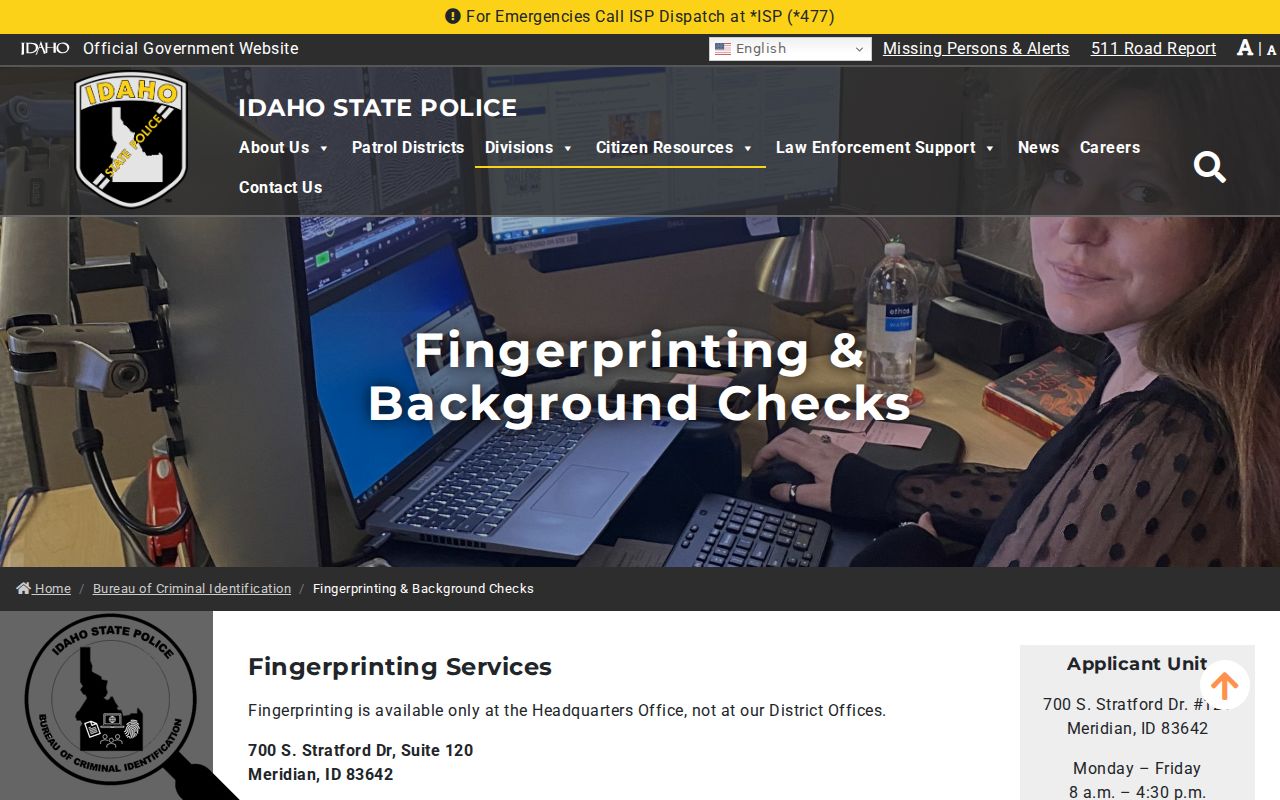
This is the official route for an Idaho repository result, not a substitute for the sheriff’s incident narrative.
BCI searches Idaho records, not every other state, federal conviction, or the FBI’s complete national file. Results cannot be notarized. Idaho Code §67-3008 also limits downstream redisclosure, and a non-criminal-justice recipient without the subject’s waiver may not receive an older arrest lacking a disposition under the conditions described by BCI.
When BCI Lacks the Court Outcome
If your fingerprint-based BCI copy shows an arrest without its Clearwater disposition, obtain the final judgment, dismissal, or other disposition from the clerk. Follow BCI’s challenge procedure and supply the official supporting document. Do not rely on a screenshot of a search result when the repository asks for court documentation.
An arrest may also be absent from BCI because no fingerprint card was submitted. In that situation, the local arresting agency and booking file can still exist. Compare identifiers and dates across sources. Corrections should go to the agency responsible for the inaccurate field: the clerk for a court-file problem, the arresting agency for its report, or BCI for the repository entry.
ISP and FBI Record Channels
When Idaho State Police made the arrest, its incident report belongs with ISP rather than Clearwater Sheriff. Use the official ISP public-record request channel and describe the event, location, date, involved unit if known, and requested document. The Idaho Public Records Act does not eliminate exemptions for active investigative or protected information.
For a national personal identity-history summary, the FBI offers its own subject-only process through the Electronic Departmental Order portal.
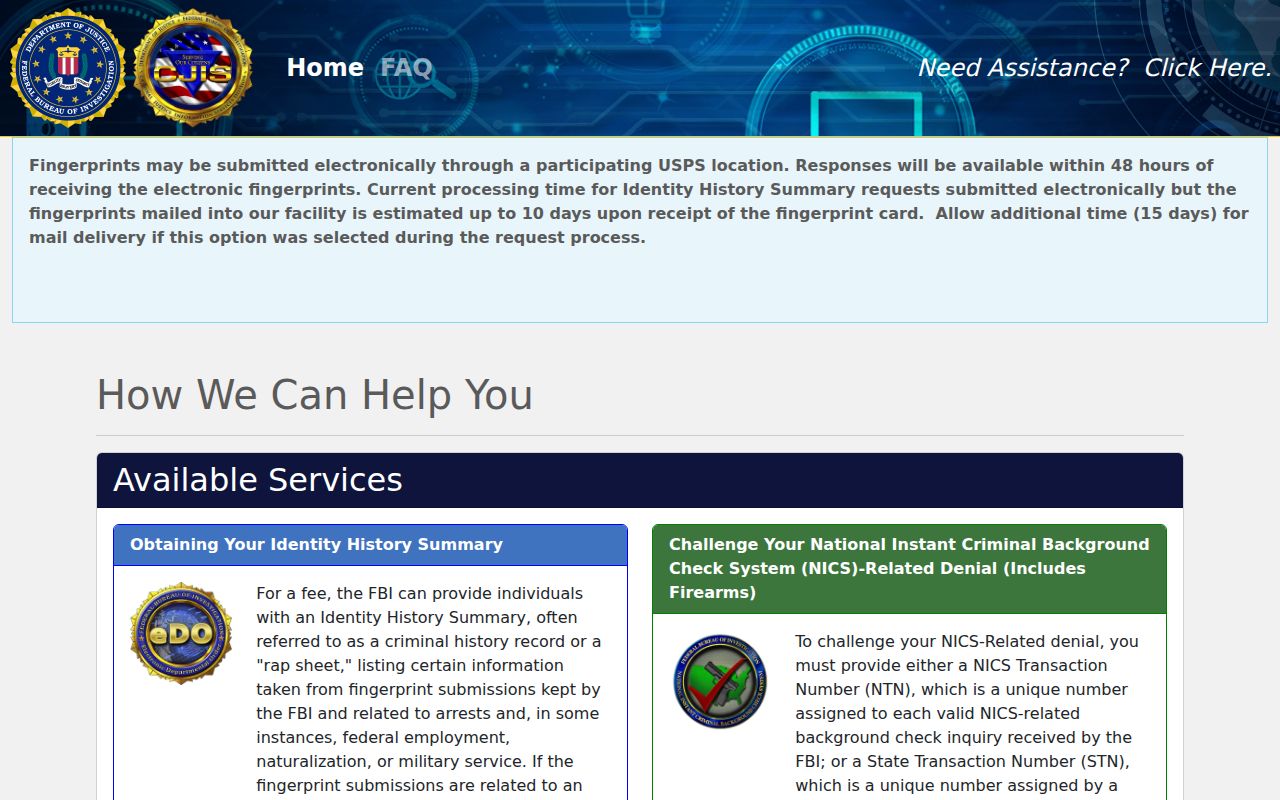
The FBI route answers a broader self-review question than a Clearwater booking inquiry or Idaho-only BCI check.
Arrests Are Not Convictions
An arrest records a law-enforcement action based on legal authority. A conviction is a court judgment of guilt after a plea or verdict. Charges may be declined, amended, dismissed, or resolved by acquittal, so a booking label should never be reported as the final case result.
| Arrest record | Conviction record |
|---|---|
| Created by the arresting agency and jail | Created by the court and reported to BCI |
| Shows an accusation and custody event | Shows a judgment of guilt on a count |
| Lives with agency and booking custodians | Lives with the clerk; state history may also report it |
| May end in release, no filing, dismissal, or acquittal | Leads to judgment, sentence, and possible later relief |
Note: An arrest is not proof of guilt. Verify the final court disposition for each filed charge.
Idaho §67-3004(10) provides narrow arrest-history expungement eligibility when no indictment or information was filed within one year, when all charges were dismissed, or when the person was acquitted of all offenses from the event. Relief requires a request; it should not be assumed from the disposition alone.